
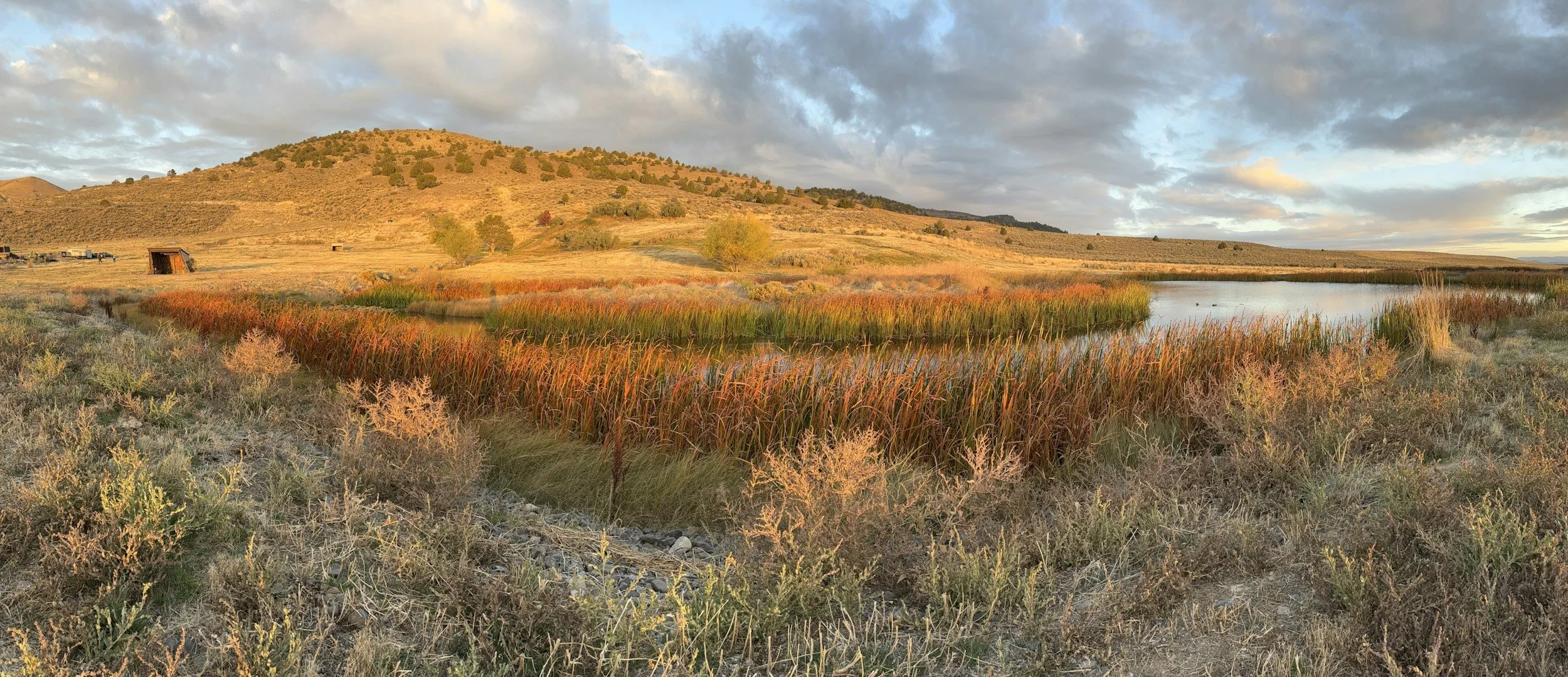
On Common Ground
One of the last things we still share, across every divide: the land itself.
On Common Ground: An American Inheritance is a documentary podcast about the fight over America's public lands — the forests, parks, refuges, and coasts we all own together — and the unlikely coalition working to keep them in public hands.

Project Directors: Sarah Hedden
Contact: sarah.hedden@mac.com
Apple Podcasts: podcasts.apple.com
Spotify: open.spotify.com
On Common Ground: An American Inheritance is a documentary podcast about the most consequential fight over America's public lands in a generation — and about whether a divided country can still protect the land it holds in common.
America holds hundreds of millions of acres in trust for all of us: national parks, forests, wildlife refuges, wilderness, and the waters off our coasts. From the Appalachian Trail to the Arctic Refuge, from Gettysburg to the Grand Canyon, these are places owned by no one and everyone. In 2025, the One Big Beautiful Bill Act quietly mandated opening more than 200 million of those acres to industrial development — roughly sixty times more land than the sell-off amendment Americans had just risen up to defeat. Most people never heard about it. This series is the story of what happened while the country was looking the other way, and of what it will take to undo the harm.
What sets the series apart is its refusal to treat this as a left-versus-right story. Public lands are one of the few things Americans across the political spectrum still share, and the series brings together an unlikely coalition: hunters and anglers, tribal leaders, conservative Republicans, veterans, scientists, and lifelong conservationists. Their shared conviction is simple — these places should remain ours to hold together, not handed to the highest bidder.
The podcast is hosted by Bill Hedden, a Utah conservationist of nearly fifty years and former executive director of the Grand Canyon Trust, and John Leshy, former Solicitor of the U.S. Department of the Interior and one of the country's foremost scholars of public-lands law. Together they trace how Americans came to hold this land in common, how that inheritance is being dismantled, and how an unlikely coalition is fighting to defend it. Listeners hear from voices including Land Tawney, Ryan Callaghan, Ada Limón, Jim Enote, and Ty Cobb, among many others.
On Common Ground began nearly a decade ago as a public-engagement campaign to reimagine America's relationship with its public lands — work the Mediators Foundation helped bring into the world as an early fiscal sponsor. This documentary podcast is its next chapter: the same conviction, sharper stakes. The goal is not only to reveal what is being lost, but to model the kind of across-the-divide coalition that any lasting protection will require. Because the question at the heart of the series is one the whole country now faces: what does it still mean to have common ground, and what would it mean to lose it?
Project Director Bios:
Sarah Hedden is the producer and project director of On Common Ground: An American Inheritance. A designer and strategist by training, she founded the original On Common Ground in 2015 — a multi-year public-engagement campaign to reimagine America's public lands — convening more than fifty writers, scientists, faith leaders, and advocates, among them Terry Tempest Williams, Maggie Fox, and Emmanuel Vaughan-Lee. During the campaign to establish Bears Ears National Monument, she served as interim development director at the Grand Canyon Trust. Her public-lands films reached 34 million households nationwide ahead of the 2018 midterm elections, and she has secured foundation and private support from funders including the Hewlett Foundation, the Christensen Fund, and the Wyss Foundation. With Terry Tempest Williams, she co-authored an essay on place-based advocacy in Erosion: Essays of Undoing. She holds a Master of Architecture from UC Berkeley and lives in Boulder, Colorado. A longtime advocate for dark skies, wild places, and the democratic institutions that protect them, she has returned to the project she began nearly a decade ago — now with far sharper stakes.