
The Complexity Project
Building coherence in complexity.
The Complexity Project designs information tools and governance structures that help people reason through complex political questions and judge for themselves, instead of reaching for the certainty that polarization and premature answers offer.
The Complexity Project builds the epistemic and structural capacity that democratic and social systems need to meet a world defined by rising complexity, interconnection, and speed of change. Individual minds are now exposed to a volume and velocity of global information that no previous generation has had to process. Pushed past what can be processed at once, a mind in overwhelm defaults to cognitive shortcuts, to binary judgment, premature certainty, and the safety of tribalism, and the harder work of weighing tradeoffs, following consequences past the first order, and exercising one’s own conscience becomes essentially inaccessible. This cost compounds at the level of systems and governance, which become unable to absorb shocks, self-correct, or evolve as fast as the environments they inhabit.
That capacity has to be built in two places at once: in individual minds and in the systems where that thinking lands collectively. The quality of our thinking shapes the institutions we build, and the institutions we inhabit shape the quality of thinking they make possible. The Complexity Project therefore works across two pillars: how political questions are understood in public and how public judgment gets into the decisions that shape people's lives. Both are designed from the same framework of epistemic capacity building, which sets out what it takes to reason through complexity without collapsing it, and both are built for how people and politics actually work.
On the structural side, we design governance containers like permanent local citizens' assemblies that are standing rather than convened for a single question and self-organizing rather than consultant led, so that the scale of a decision matches the scale at which citizens can perceive it. At that scale, deliberation rebuilds the interpersonal trust that national politics otherwise cannot reach.
On the information side, we build tools that open contested questions into their real decision space, beginning with a decision mapping interface that decompresses labels and opens a question into its tradeoffs, second order effects, and honest uncertainty. A local version, in development, applies the same system to the community news, budgets, board agendas, and filings that shape daily life, to bring abstract political thinking back into the particular. These components form a unified body of work at different scales, building coherence in complexity in the places people live and in the minds they think with.
Project Director Bio
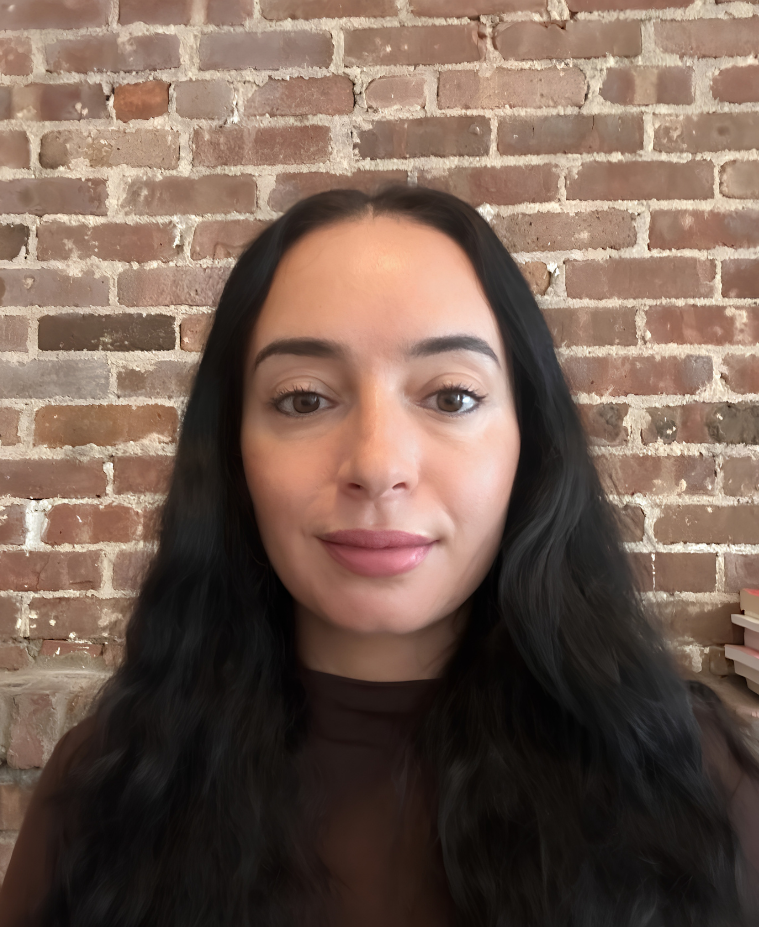
Susan DiVito is the founder and director of The Complexity Project. She holds an MBA in Economics from New York University and is completing an MS in Applied Neuroscience at King's College London, studying how minds process experience and information. She works with individuals on cognitive and emotional capacity, grounded in neuroscience and developmental theory, through a private coaching practice in New York City. She previously worked in finance and technology for more than a decade and more recently served as state communications lead and board member for Forward Party New York, supporting electoral reform, depolarization, and independent thought in politics. Susan also volunteers in hospice care and teaches meditation in correctional facilities. Across these diverse environments, the work is the same, which is expanding what a mind or a system can hold.
Susan welcomes conversations with anyone working in this space, particularly funders, technical builders, researchers, and civic lawyers.